
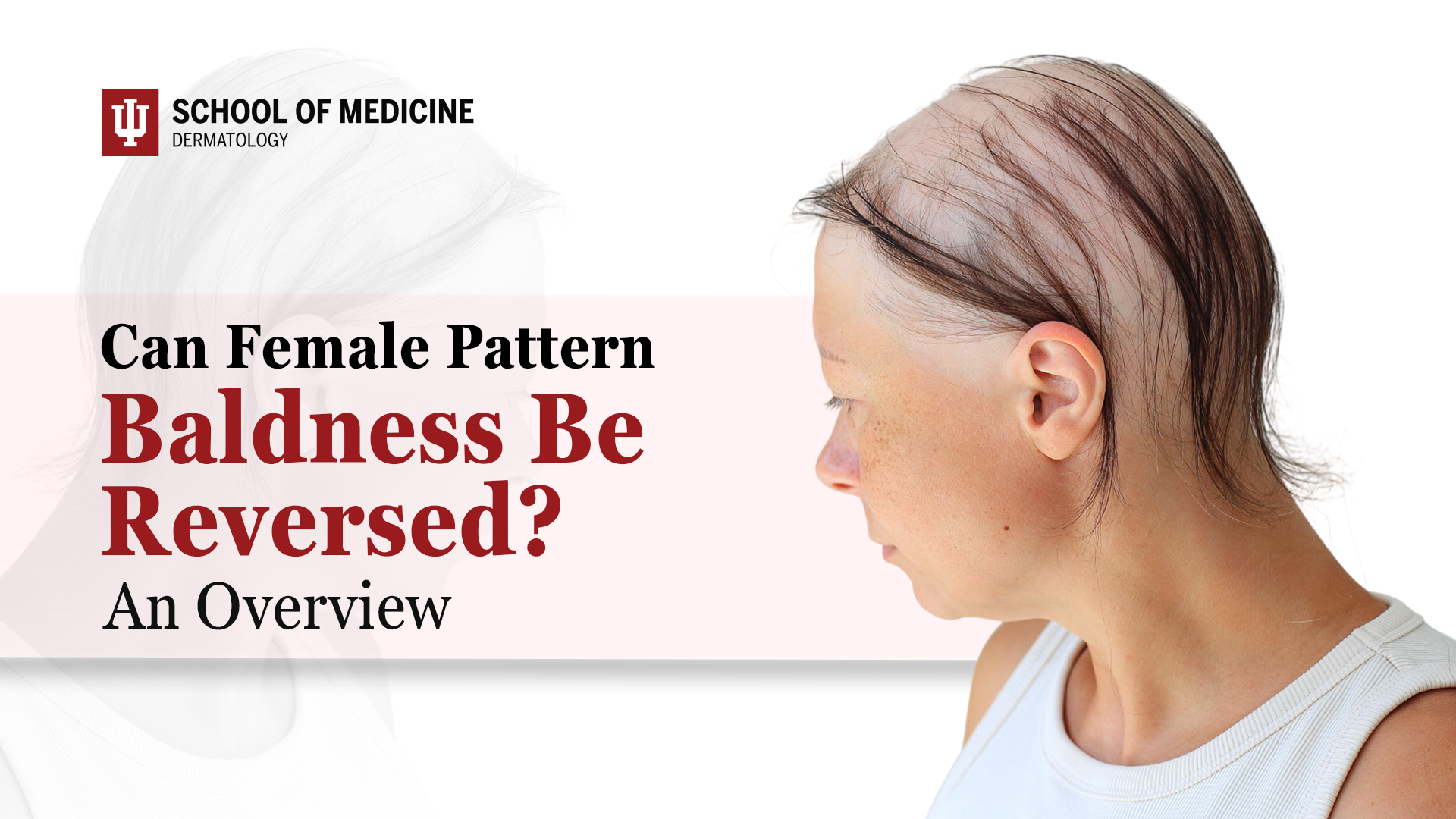
Female pattern baldness cannot be permanently cured or completely reversed. However, treatment can slow or stop further hair thinning and may regrow hair from follicles that are still active.
Noticing more hair on your brush or seeing your part become wider can be worrying. For many women, hair thinning develops gradually, making it easy to overlook at first. One possible cause is female pattern hair loss, a common condition that usually affects the hair on the top and center of the scalp.
The good news is that hair thinning does not always mean permanent hair loss. Several treatments can help slow progression and support hair growth. However, the best approach depends on why the hair is thinning in the first place. Female pattern hair loss can resemble other forms of hair loss caused by hormones, nutritional problems, medications, stress, or medical conditions.
So, can female pattern baldness be reversed? The answer depends on what is causing the hair loss and how early it is addressed.
Female pattern baldness, also called androgenetic alopecia, is a common form of progressive hair thinning in women.
Instead of usually producing a completely bald area, it often causes:
The condition is often hereditary. You can inherit a tendency toward female pattern hair loss from either parent. Hormonal changes may also contribute, which helps explain why it becomes more common with age and around or after menopause.
There is no single cause in every woman.
Female pattern baldness commonly runs in families. You can inherit genes associated with hair follicle sensitivity from either parent. These genetic factors can cause follicles to gradually produce thinner hairs and can reduce overall hair density.
Also read: Is Baldness Hereditary? Understanding the Genetics Behind Hair Loss
Hormones may influence hair growth, particularly during periods such as menopause. However, female pattern hair loss should not simply be viewed as a condition caused by "too many male hormones." The role of hormones in women is more complex, and many women with androgenetic alopecia do not have obvious hormone abnormalities.
The likelihood of hereditary hair loss may increase with age. However, thinning hair can also have other causes, including:
That is why identifying the underlying cause of hair thinning is important before assuming it is female pattern baldness.
Both conditions involve gradual shrinking of hair follicles, but the pattern is often different.
In women, thinning usually occurs diffusely across the top of the scalp, while the front hairline is often maintained.
In men, hair loss more commonly begins at the temples and front hairline and may progress toward the crown.
Women can also experience more extensive hair loss, but a completely bald scalp is less typical. The underlying biology also differs, so a treatment that is commonly used for male pattern baldness may not be appropriate for every woman.
A dermatologist will usually look at your scalp and ask about when the hair loss started, how quickly it has progressed, your family history, medications, health conditions, and other symptoms. Depending on what they find, additional tests may be recommended to look for another cause of hair loss.
This distinction matters because conditions such as telogen effluvium, traction alopecia, and certain scarring forms of hair loss require different approaches. Some scarring conditions can permanently damage follicles, making early evaluation particularly important.
{{derma-cta-banner}}
Treatment depends on the diagnosis and individual circumstances.
Topical minoxidil is the most established treatment for female pattern hair loss and has the strongest evidence among commonly used medical treatments. Studies have found that it can improve hair growth compared with placebo.
It may take six to 12 months to properly judge the response. Some women experience temporary increased shedding during the first few weeks. If minoxidil is effective, continued use is generally needed to maintain its benefits.
A dermatologist may consider prescription medicines such as spironolactone for selected women. Other antiandrogen treatments may also be considered depending on age, symptoms, reproductive plans, and other health factors.
These medicines are not suitable for everyone and can have important safety considerations. Some are also used off-label for hair loss. A healthcare professional should determine whether they are appropriate.
Low-level light devices, cosmetic hair fibers, hairpieces, platelet-rich plasma (PRP) treatment and hair transplantation may have a role in selected cases. However, the evidence for some non-medication approaches is less established than it is for topical minoxidil.
Supplements should not be viewed as a universal hair-loss treatment. They may be useful when a genuine nutritional deficiency is identified, but taking extra vitamins without a known deficiency does not necessarily improve hair growth.
Hair grows slowly, so treatment for female pattern baldness usually takes several months to show noticeable results. While everyone responds differently, here is a general timeline:
If there is little or no improvement over time, the diagnosis or treatment may need to be reassessed.
It can, depending on the condition of the hair follicles and how early treatment begins.
Female pattern hair loss involves gradual follicle miniaturization, meaning the follicles produce thinner and shorter hairs. Treatment may help slow this process and, in some women, increase hair density.
However, treatment is generally better at preserving and improving existing hair than restoring hair that has been lost for a long time. This is one reason early evaluation is important.
Complete restoration to the hair density a woman had years earlier should not be assumed.
Consider seeing a dermatologist or other qualified healthcare professional if your hair loss:
A proper evaluation can help distinguish female pattern hair loss from conditions that require a different approach.
Research is continuing to investigate potential new approaches for female pattern hair loss. Clinical research studies are evaluating different medicines, treatment combinations, formulations, and ways of targeting the biological processes involved in hair follicle miniaturization.
Current evidence supports topical minoxidil, while several other approaches still need stronger, well-designed clinical trials. This makes clinical research an important part of understanding what may work for women in the future.
If you are interested in research, a clinical research team can explain whether a study is available, who may qualify, and what participation involves, including opportunities for participating in dermatology clinical trials. Joining a clinical trial is voluntary and does not guarantee that a participant will receive an effective treatment.
{{derma-cta-banner}}
So, can female pattern baldness be reversed? In some women, treatment can improve hair growth and density, but complete reversal is not guaranteed. The earlier the condition is recognized, the better the opportunity to preserve existing hair and manage further thinning.
Because female hair loss can have many causes, identifying the reason behind the change is just as important as choosing a treatment. At Indiana University, our dermatology team conducts clinical research to explore new approaches to conditions affecting the skin, hair, and nails. Learn more about our clinical research organization in Indiana and the research opportunities currently available.
Medical Disclaimer
This article is for general educational purposes only and does not replace professional medical advice, diagnosis, or treatment. Consult a qualified healthcare professional for personalized guidance.
Female pattern hair loss is generally progressive and does not usually disappear without treatment. However, hair loss caused by hormonal changes, illness, nutritional deficiencies, or other conditions may improve when the underlying cause is addressed.
Some women experience regrowth or increased hair density with treatment. Results vary based on the severity, duration, and treatment used. Early treatment may help preserve existing hair.
Not necessarily. Hormones can play a role, but genetics, age, and individual hair follicle sensitivity can also contribute.
No. Minoxidil can help stimulate hair growth and maintain hair density, but it does not permanently cure the condition. Continued treatment is generally needed to maintain benefits.
No. Persistent or progressive hair loss should generally be evaluated early. Treatment may be more useful for preserving existing hair before extensive, long-term thinning occurs.


