
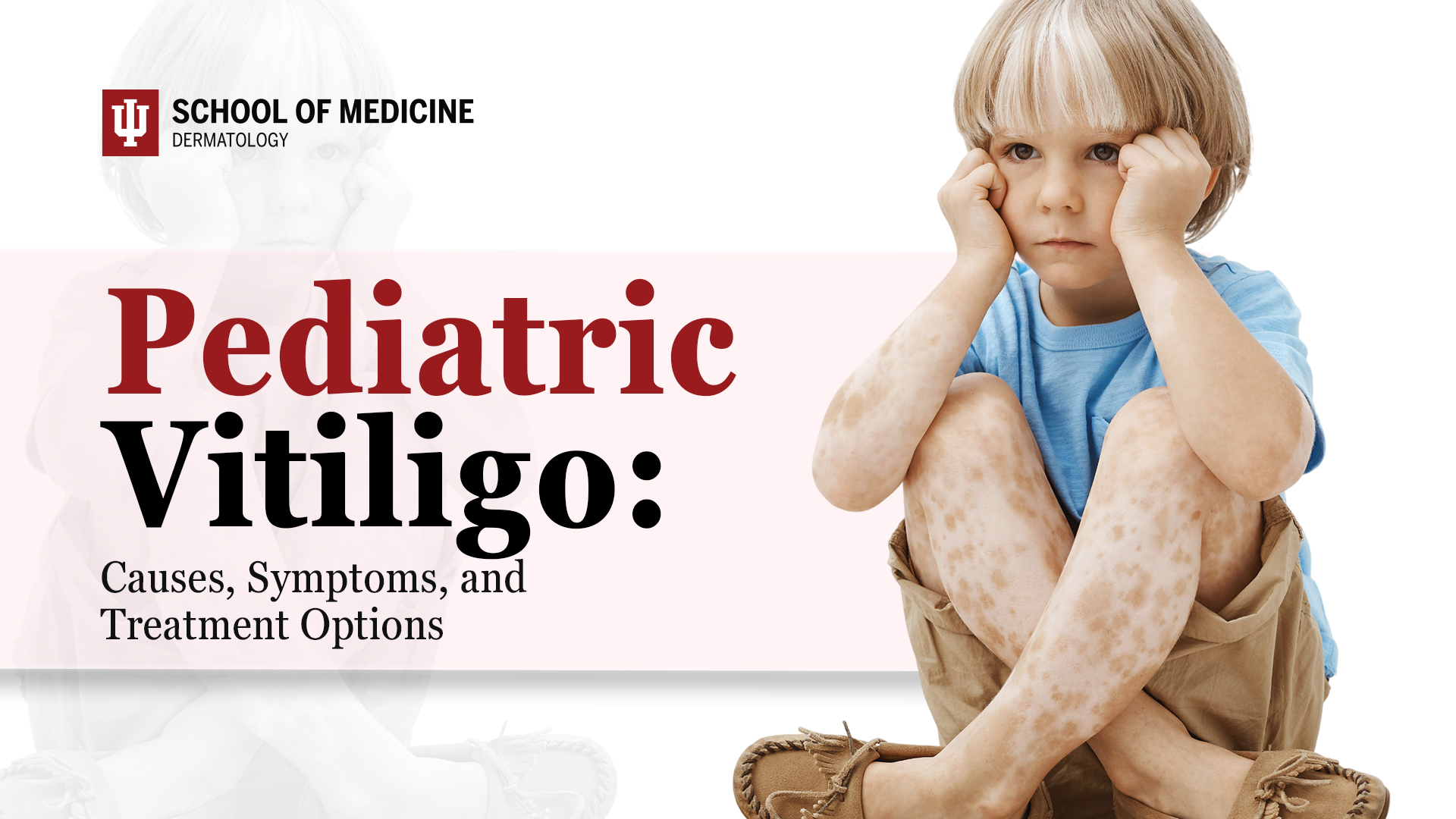
Quick answer: Pediatric vitiligo is a condition in which areas of a child’s skin lose pigment, often resulting in lighter or white patches. It may be associated with autoimmune processes, but the exact cause is not fully understood. Diagnosis and treatment depend on the child’s symptoms, age, skin involvement, and individual needs.
Pediatric vitiligo refers to vitiligo that develops during childhood. Vitiligo occurs when melanocytes, the cells responsible for producing melanin, the pigment that gives skin its color are damaged, destroyed, or stop functioning effectively in affected areas.
The result may be patches of skin that appear lighter than the surrounding skin or completely depigmented. These patches can develop on the face, hands, feet, arms, legs, or other areas. They may also affect areas such as the lips, around the eyes, or other body openings.
Vitiligo is a pigmentation disorder, not an infection. It does not spread from one person to another through touch, sharing belongings, or close contact.
The appearance and progression of vitiligo can vary considerably. Some children develop a few stable patches, while others experience changes in the number or size of affected areas over time. A dermatologist can help distinguish vitiligo from other conditions that cause changes in skin color.
The exact causes of pediatric vitiligo are not completely understood. Research suggests that several factors may contribute to the development of the condition.
Vitiligo is commonly associated with autoimmune mechanisms. In autoimmune conditions, the immune system mistakenly targets the body's own cells or tissues. In vitiligo, this process may affect melanocytes, reducing pigment production in certain areas.
However, the precise biological processes involved can differ between individuals, and not every aspect of vitiligo development is fully understood. The National Institute of Arthritis and Musculoskeletal and Skin Diseases (NIAMS) describes vitiligo as a condition involving the loss of skin pigment and notes that autoimmune, genetic, and other factors may play a role.
Children with a family history of vitiligo or certain autoimmune conditions may have an increased likelihood of developing the condition. However, having a family member with vitiligo does not mean a child will necessarily develop it.
Vitiligo is not inherited in a simple, predictable pattern. Genetic susceptibility may interact with environmental or biological factors.
Researchers have investigated oxidative stress, cellular responses, and other biological pathways that may contribute to melanocyte damage. These mechanisms are part of ongoing research into why vitiligo develops and how it may be managed.
Some individuals report that changes in skin color became noticeable after events such as skin injury, sunburn, or significant physical stress. A phenomenon called Koebner phenomenon may cause vitiligo patches to appear at sites of skin trauma in some people.
However, not every child with vitiligo has an identifiable trigger. Parents should avoid assuming that a particular activity, food, or routine caused the condition without professional evaluation.
Recognizing pediatric vitiligo symptoms can help parents know when to seek a dermatological assessment. The most common sign is the appearance of lighter or white patches on the skin.
Common symptoms and features may include:
White patches on children's skin do not always indicate vitiligo. Other possible causes include fungal infections, post-inflammatory pigment changes, eczema-related hypopigmentation, and other skin conditions. A dermatologist may use a physical examination and, when appropriate, tools such as a Wood’s lamp to help evaluate the patches.
Vitiligo can be classified into different types based on the pattern and distribution of pigment loss. Understanding these categories may help families discuss diagnosis and management with a dermatologist.
Non-Segmental vitiligo is the more common pattern and may involve patches on both sides of the body. It can affect areas such as the hands, face, knees, elbows, and other locations.
The extent and activity of pigment loss can vary. Some children may have limited involvement, while others may develop more widespread patches.
Segmental vitiligo typically affects one side or a specific region of the body. It may follow a localized distribution and can behave differently from non-segmental forms.
Segmental vitiligo often develops over a period of time and may become stable, although individual experiences differ. A dermatologist can assess the pattern and discuss what it may mean for monitoring and treatment.
Universal vitiligo is a rare form in which pigment loss affects most of the skin. It is significantly more extensive than localized forms.
This term describes the extent of depigmentation rather than a separate cause. Extensive pigment loss requires careful dermatological assessment and attention to sun protection because areas with reduced melanin have less natural protection from ultraviolet radiation.
Changes in skin color can be described using several terms. Understanding the differences can help parents interpret information they encounter online.
For example, childhood skin depigmentation may refer to a visible change in skin color, but it does not establish a diagnosis. A child with lighter patches may have vitiligo, another pigmentation disorder, or a temporary change following inflammation or irritation.
Because different conditions can look similar, professional evaluation is important before beginning treatment.
A dermatologist typically begins by reviewing the child's medical history and examining the affected skin. The evaluation may include questions about:
A Wood’s lamp examination may be used to make pigment changes more visible and help distinguish vitiligo from certain other causes of lighter skin. In some cases, additional testing may be considered based on the child's medical history or examination findings.
Not every child needs extensive testing. The appropriate evaluation depends on the individual presentation and the clinician’s judgment.
There is no single treatment that is appropriate for every child with vitiligo. Pediatric vitiligo treatment depends on factors such as the child's age, the extent and location of pigment loss, whether the condition appears active or stable, and how the patches affect the child.
Treatment goals may include restoring pigment in affected areas, reducing the appearance of contrast between patches and surrounding skin, or managing the condition through observation and supportive care.
Topical corticosteroids may be prescribed for certain children with vitiligo. These medications can help reduce inflammation and may support repigmentation in some cases.
Because prolonged or inappropriate use can cause side effects, including skin thinning and other local changes, topical corticosteroids should be used only under medical supervision. A dermatologist can determine whether a particular medication, strength, and duration are suitable for a child.
Topical calcineurin inhibitors, such as tacrolimus or pimecrolimus, may be considered for selected cases, particularly when sensitive areas such as the face are involved.
These medications may be used when a clinician determines that their potential benefits outweigh the risks. Families should follow the prescribed instructions and discuss possible side effects with the treating professional.
Phototherapy uses controlled exposure to specific types of ultraviolet light to support repigmentation. Narrowband UVB is one option that may be considered for children with more extensive or difficult-to-manage vitiligo.
Phototherapy should be administered according to a dermatologist’s treatment plan. The number and frequency of sessions vary based on the child’s condition and response.
The American Academy of Dermatology Association outlines treatment approaches for vitiligo, including topical medications and phototherapy, while emphasizing that treatment selection depends on individual circumstances.
Depending on the child's age and circumstances, a dermatologist may discuss other options, including:
Treatment outcomes vary. Repigmentation may take time, and some areas such as the hands, feet, or certain body locations, may respond differently from others. Families should discuss realistic expectations with a dermatologist.
{{vitiligo-cta-banner}}
Visible skin differences can affect how children feel about themselves, especially during school years or adolescence. Some children may experience unwanted questions, teasing, or concerns about being different.
Parents and caregivers can support a child by:
Emotional support is not a replacement for medical care, but it can be an important part of helping children feel understood and supported.
Areas affected by vitiligo contain less melanin, which normally provides some natural protection against ultraviolet radiation. As a result, depigmented skin may burn more easily.
Families can discuss appropriate sun protection with their healthcare professional. General protective measures may include:
Sun protection is useful for reducing sunburn risk and may also help reduce the contrast between affected and surrounding skin.
Parents may schedule an evaluation if they notice:
Early assessment can help clarify the cause of pigment loss and establish an appropriate monitoring or treatment plan. It is important not to apply prescription creams or home remedies without professional guidance, particularly on a child's skin.
Clinical research helps investigators better understand vitiligo, evaluate potential treatments, and study how the condition affects people at different ages. Research may explore new medications, treatment combinations, mechanisms of pigment loss, or approaches to improving quality of life.
For families interested in learning more, dermatology clinical research studies may provide information about research opportunities. However, participation is voluntary, and eligibility requirements vary by study.
Parents or guardians considering a study for a child should review the study details with the research team and the child's healthcare professional. Questions may include:
Families can explore available vitiligo clinical trials through resources such as Indiana University Clinical Trials. Search results should be reviewed carefully, and families should confirm study details directly with the research team.
{{vitiligo-cta-banner}}
Pediatric vitiligo can be an unfamiliar and concerning diagnosis for families, but understanding the condition is an important first step toward informed care.
Recognizing symptoms, learning about possible causes and seeking a professional evaluation can help parents understand what may be contributing to changes in their child's skin.
While there is no single treatment plan for every child, dermatologists can discuss suitable options based on the child's age, symptoms, and individual needs. For families interested in advancing knowledge about pigmentation disorders, dermatology clinical research studies and vitiligo clinical trials may offer opportunities to learn about ongoing research, subject to study-specific eligibility and informed consent requirements.
Vitiligo in children is a recognized condition. It is one of the possible causes of pigment loss in children. If a child develops persistent white or light patches, a dermatologist can help determine whether vitiligo or another condition is responsible.
Vitiligo may remain limited to certain areas or may increase in size or distribution over time. Its course is unpredictable, and some forms may become stable. A dermatologist can monitor changes and discuss treatment or follow-up based on the child’s presentation.
There is currently no guaranteed cure for vitiligo, but treatment may help restore pigment in some affected areas or reduce the appearance of contrast. Results vary depending on the type of vitiligo, the areas involved, and the treatment used.


