
Note: This blog is for general educational purposes only and does not replace professional medical advice, diagnosis, or treatment. If you have health concerns, consult a qualified healthcare professional.
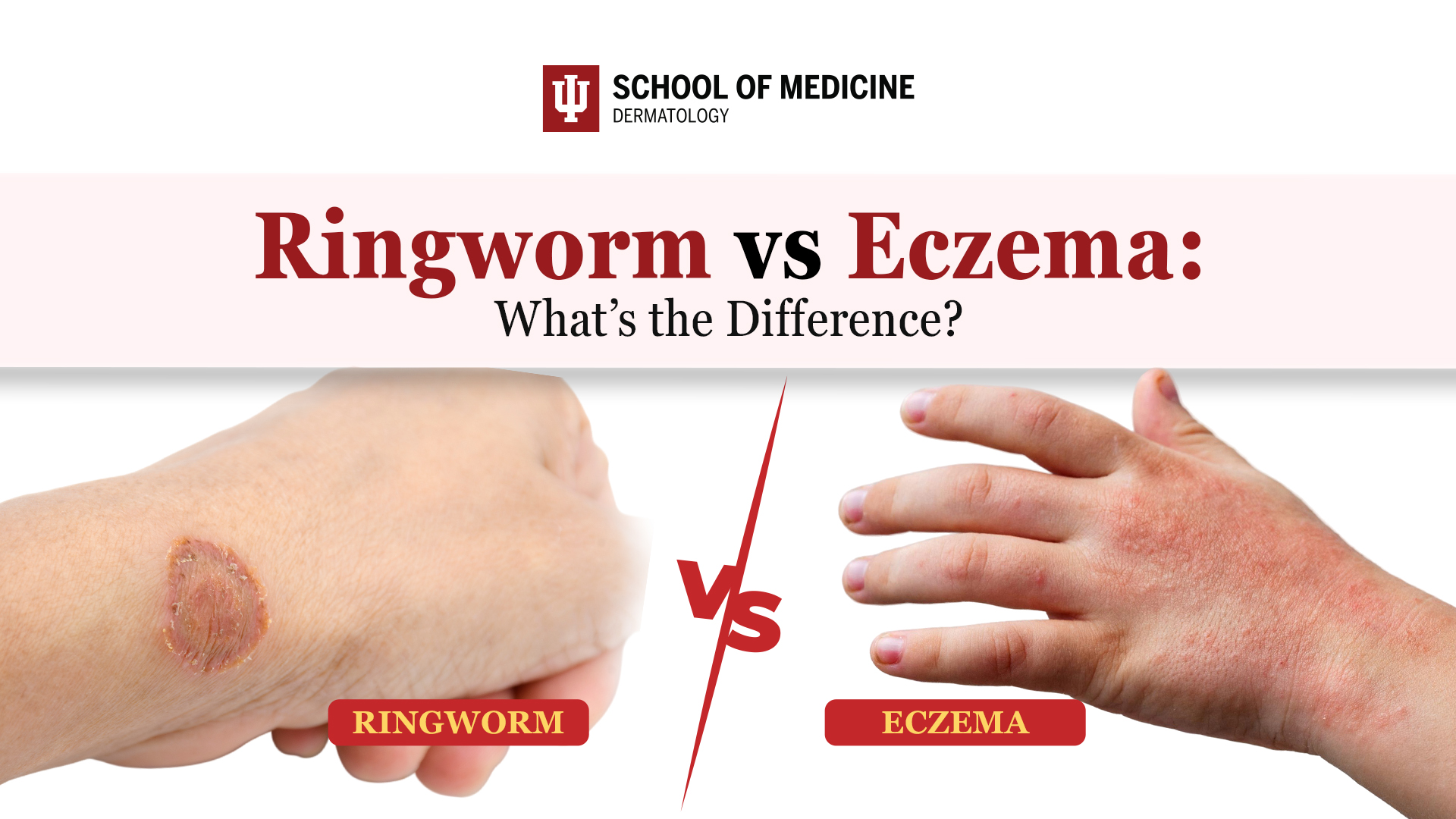
Ringworm and eczema are different skin conditions that can cause similar symptoms, including itching, redness, and scaling. Ringworm is a contagious fungal infection, while eczema causes inflammation and is not contagious. Ringworm often causes a circular, scaly rash, whereas eczema can cause dry, cracked, swollen, or thickened skin. Because the two conditions require different treatments, an accurate diagnosis is important.
Ringworm and eczema are two common skin conditions that can cause circular, itchy, irritated, and scaly skin rashes. Although they may look similar, they have different causes and require different treatments. Understanding their key differences can help you recognize the signs, know when to seek medical advice, and choose the appropriate treatment.
Ringworm is a common and contagious fungal skin infection. Despite its name, it has nothing to do with worms. It gets its name from the red, itchy, ring-shaped rash it can cause on the skin. Fungi that cause ringworm thrive in warm, humid environments and can spread easily through close contact.
You can get ringworm by touching an infected person or animal. It can also spread through contaminated objects, such as clothing, towels, bedding, and shared surfaces. The infection may affect different parts of the body, including the skin, scalp, feet, and groin.
Symptoms vary depending on the area affected but often include an itchy, scaly rash that may appear red and raised around the edges. On the body, ringworm commonly forms a ring-shaped patch that may gradually expand outward. Ringworm can usually be treated with antifungal medication, either over the counter or by prescription, depending on the type and severity of the infection.
Eczema is a group of inflammatory skin conditions that can cause dry, itchy, rough, or bumpy skin. It can affect the skin barrier, which normally helps keep moisture in and protects the skin from irritants and other outside elements. Different types of eczema can affect different areas of the body.
The most common types of eczema include atopic dermatitis, contact dermatitis, and dyshidrotic eczema. Each type can cause different symptoms and affect different areas of the skin.
Unlike ringworm, eczema is not caused by a fungus and is not contagious. Common symptoms include dry skin, itching, redness, swelling, scaling, and sometimes small bumps or blisters. Eczema can affect the hands, face, arms, legs, and other areas of the body.
Eczema symptoms can come and go over time. Periods when symptoms become worse are called flare-ups, while the skin may improve between flare-ups. Triggers such as irritants, allergens, dry weather, stress, or changes in temperature may cause symptoms to worsen.
Although ringworm and eczema can both cause itchy, irritated skin, they have different causes and require different treatments.
A healthcare provider can often distinguish ringworm from eczema by examining the rash and asking about when it started, how it has changed, and whether you have had possible exposure to an infection or known eczema triggers. The location and appearance of the rash can also provide useful clues.
When ringworm is suspected, a healthcare provider may gently scrape some affected skin and examine the sample for fungi. Additional testing may be recommended when the diagnosis is uncertain or when the rash does not respond as expected to treatment.
Because the two conditions can sometimes look similar, avoid assuming that an itchy or scaly rash is eczema or ringworm based on appearance alone. A persistent, spreading, or unclear rash should be evaluated by a healthcare professional.
Ringworm is treated with antifungal medication that targets the fungus causing the infection. For infections affecting the skin, an antifungal cream, lotion, or other topical treatment may be enough. The recommended treatment depends on where the infection occurs, how extensive it is, and how severe the symptoms are.
Some infections, particularly those affecting the scalp or nails, may require prescription antifungal medication taken by mouth. Treatment should be continued as prescribed, even if the rash starts to improve.
Steroid creams can reduce redness and itching, but they do not treat the fungus itself. Using a steroid cream alone on a fungal infection can sometimes make the infection harder to recognize or allow it to worsen. If you are unsure whether a rash is ringworm or eczema, it is best to seek medical advice before using a steroid treatment.
{{atopic-cta-banner}}
Eczema treatment focuses on reducing irritation, supporting the skin barrier, and controlling inflammation. Regularly applying moisturizers can help reduce dryness and protect the skin. Identifying and avoiding personal triggers can also reduce the frequency or severity of flare-ups.
A healthcare provider may recommend topical treatments to control inflammation during flare-ups. The choice depends on the type of eczema, the affected area, and the severity of symptoms.
If eczema remains difficult to control, a healthcare provider may consider additional treatments, including prescription medicines or other therapies for moderate to severe disease. Because eczema varies from person to person, treatment is usually adjusted according to how the skin responds.
Yes, it is possible to have ringworm and eczema at the same time. Having eczema does not prevent you from developing a fungal infection, and the two conditions can sometimes be difficult to distinguish because they may cause similar skin changes.
Clinical research studies in Indiana are helping researchers evaluate potential new treatments for chronic skin conditions, including atopic dermatitis. For example, an ongoing clinical trial is evaluating an investigational treatment for adults with moderate to severe atopic dermatitis. By participating, you can help researchers advance dermatology research.
{{atopic-cta-banner}}
Read more: Nummular Eczema vs Ringworm: Key Differences and Potential Treatments
In conclusion, ringworm and eczema can look similar, but their causes, symptoms, and treatments differ. Knowing these differences can help you recognize when a rash may need medical attention. If you are unsure whether you have ringworm, eczema, or both, consult a healthcare professional for an accurate diagnosis and appropriate treatment.


